Calluses on the Foot
Calluses are areas of thickened skin that develop in response to repeated pressure or friction. Unlike a corn, which is more focused and often painful, a callus usually forms over a broader area of the foot such as the heel or ball of the foot.
Related: Corns & Calluses overview
What is a callus?
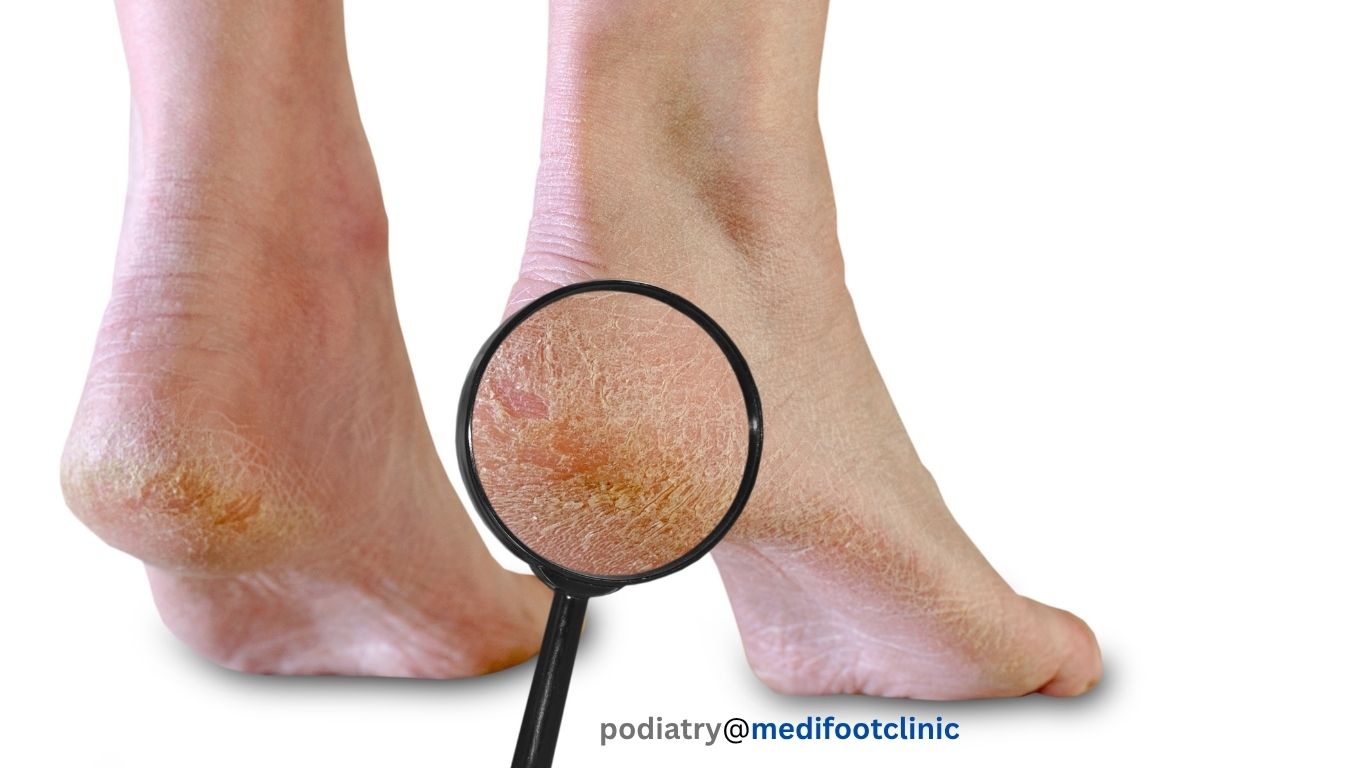
A callus is a diffuse thickening of the outer skin layer caused by ongoing pressure or friction. It forms as the skin’s natural way of protecting itself, but can become uncomfortable when it builds up excessively.
Common symptoms of calluses
- Thickened, yellowish or dry skin
- Rough or hardened areas on the heel or forefoot
- Mild to moderate discomfort when walking
- Skin that may crack if it becomes too dry
Common causes of calluses
- Prolonged standing or walking
- Footwear that increases pressure or friction
- Altered foot mechanics or gait patterns
- Prominent pressure areas under the foot
Treatment for calluses
- Reduction of thickened hard skin
- Moisturising care to improve skin condition
- Footwear advice and pressure redistribution
- Orthotics where recurring pressure is present
Callus treatment in Craigieburn and Gladstone Park
Medifoot Clinic helps patients across Craigieburn, Gladstone Park, and surrounding Melbourne suburbs manage painful or recurring calluses. Treatment focuses on reducing hard skin safely and addressing the pressure that causes it to build up.
Frequently Asked Questions About Calluses
Why do calluses form?
Calluses form because the skin is responding to repeated pressure or friction.
Are calluses always painful?
Not always. Some are painless initially but can become uncomfortable as they thicken.
Can I remove a callus myself?
Mild care may help, but cutting hard skin yourself can be risky, especially in sensitive feet.
When should I see a podiatrist?
If the callus is painful, recurring, cracked, or affecting your walking, it should be assessed.
When to Seek Podiatry Care for a Callus
A callus should be checked when it becomes painful, keeps returning, or begins to crack.
- If the area becomes sore or tender
- If it keeps coming back
- If the skin cracks or becomes dry
- If walking or standing makes it worse
- If you have diabetes or reduced sensation
Also see: Corn vs Callus
Also see: Cracked Callus Foot