Cracked Heels Treatment
Cracked heels can range from dry rough skin to painful splits that make standing and walking uncomfortable. For some people, they are mainly a cosmetic problem. For others, the skin begins to fissure under pressure and can become tender, recurrent and harder to manage at home. At MediFoot Clinic, we assess cracked heels carefully and help reduce hard skin, improve skin flexibility and address the reasons the problem keeps returning.
What are cracked heels?
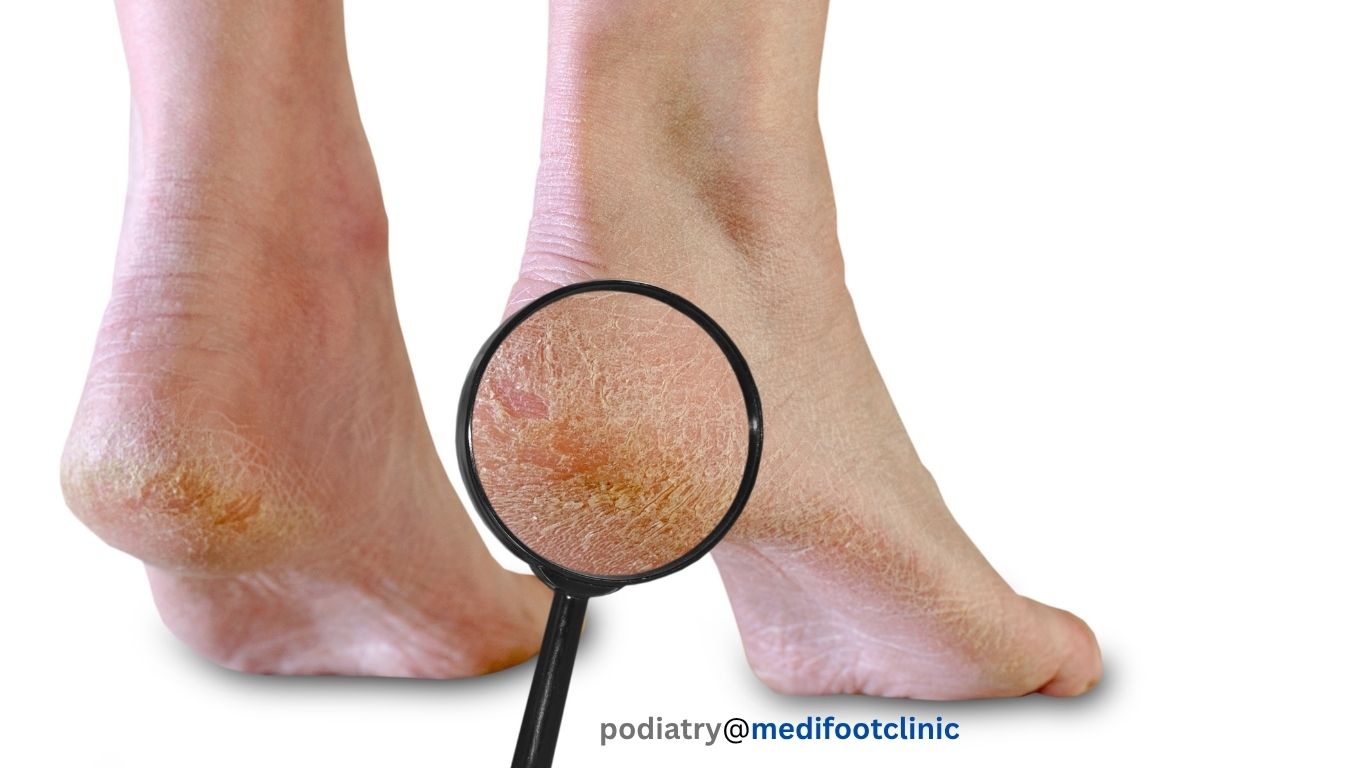
Cracked heels occur when the skin around the heel becomes dry, thickened and less flexible, then starts to split under body weight and pressure. These splits are often called fissures. Some stay mild and superficial, while others become deeper and more painful over time.
Common signs and symptoms
- Dry, rough or thickened skin around the heel
- Visible cracks or splits in the skin
- Pain when standing or walking
- Skin that feels tight, hard or fragile
- Callus build-up around the edge of the heel
- Repeated cracking in the same area
Why heels crack
Heel skin cracks when it becomes too dry and thick to stretch normally under load. Repeated pressure from standing, walking, open-backed footwear, friction and the way the heel moves can all contribute. When hard skin builds up around the edge of the heel, it is more likely to split.
Common causes
- Dry skin around the heel
- Callus build-up and thick hard skin
- Long periods of standing or walking
- Open-backed shoes or poorly supportive footwear
- Pressure from foot posture or gait
- Skin prone to dryness or reduced flexibility
- Fungal skin infections such as athlete's foot, which can compromise skin integrity and contribute to cracking
When cracked heels need professional care
If heel cracks are painful, deep, recurrent or not improving with moisturising and better footwear, it is worth getting them checked. Prompt assessment is especially important if you have diabetes, poor circulation or reduced sensation, because skin breakdown can become more serious.
Treatment for cracked heels
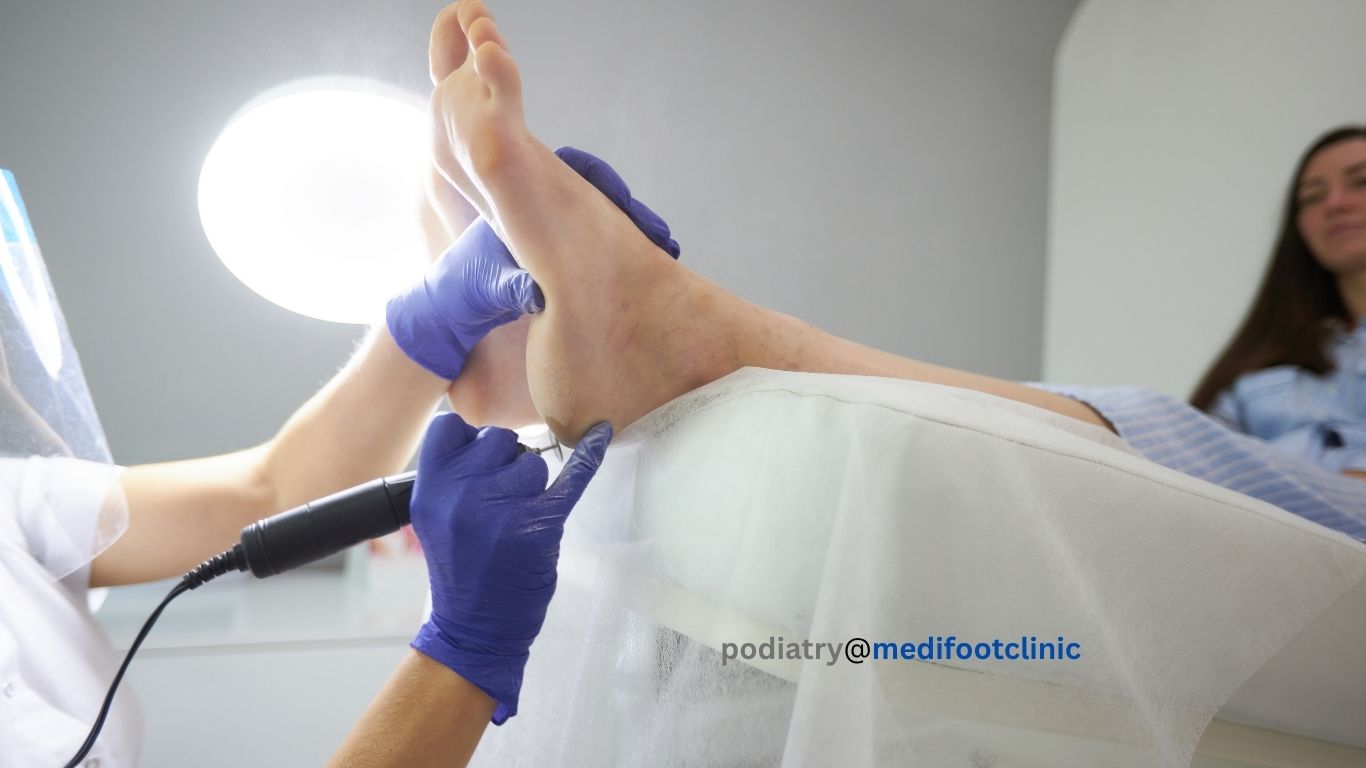
- Professional reduction of thick hard skin
- Moisturising care to improve skin flexibility
- Pressure relief and footwear advice
- Assessment of heel loading and foot mechanics
- Ongoing care to reduce recurrence
If the heel cracking is linked with broader hard-skin build-up, you may also want to read our corns and calluses page. If the problem sits within a broader skin and nail pattern, see our skin and nail care guide.
Cracked heel treatment in Craigieburn and Gladstone Park
MediFoot Clinic helps patients in Craigieburn, Gladstone Park and surrounding northern Melbourne suburbs manage painful cracked heels, dry skin and hard-skin build-up. Treatment focuses on making the skin more comfortable and safer while addressing why the problem keeps returning.
Frequently Asked Questions About Cracked Heels
Why do heels crack?
Heels crack when dry thickened skin loses flexibility and splits under pressure, friction and load.
Are cracked heels painful?
They can be. Mild cracks may feel dry or tight, while deeper fissures can become painful during standing and walking.
Can cracked heels get worse if left untreated?
Yes. Ongoing dryness and pressure can make the cracks deeper and more uncomfortable over time.
When should cracked heels be checked by a podiatrist?
It is worth getting them checked if they are painful, deep, recurrent or not improving with simple moisturising and pressure reduction.
Are cracked heels linked to calluses?
Often yes. Thick hard skin around the heel commonly increases the chance of the skin splitting.
Related Skin & Nail Pages
Need Help With Painful Cracked Heels?
If your heel skin is dry, splitting or becoming painful, MediFoot Clinic can assess the problem and help you move forward with a practical treatment plan.