Fungal Nail Infection Treatment
Fungal nail infection can cause toenails to become thick, brittle, yellow, discoloured or difficult to cut. For many people, it starts as a small cosmetic change but gradually becomes harder to manage, especially when the nail thickens, becomes uncomfortable in shoes or starts catching on socks. At MediFoot Clinic, we assess fungal-looking nails carefully and help patients with practical podiatry care, treatment advice and ongoing nail management.
What Is a Fungal Nail Infection?
A fungal nail infection, also known as onychomycosis, is a common condition where fungus affects the nail plate or the skin underneath the nail. It often develops slowly and may begin with mild discoloration or a small change in nail texture. Over time, the nail can become thicker, rougher, misshapen or harder to trim. Some nails remain painless, while others become uncomfortable due to pressure from footwear or build-up of thickened nail material.
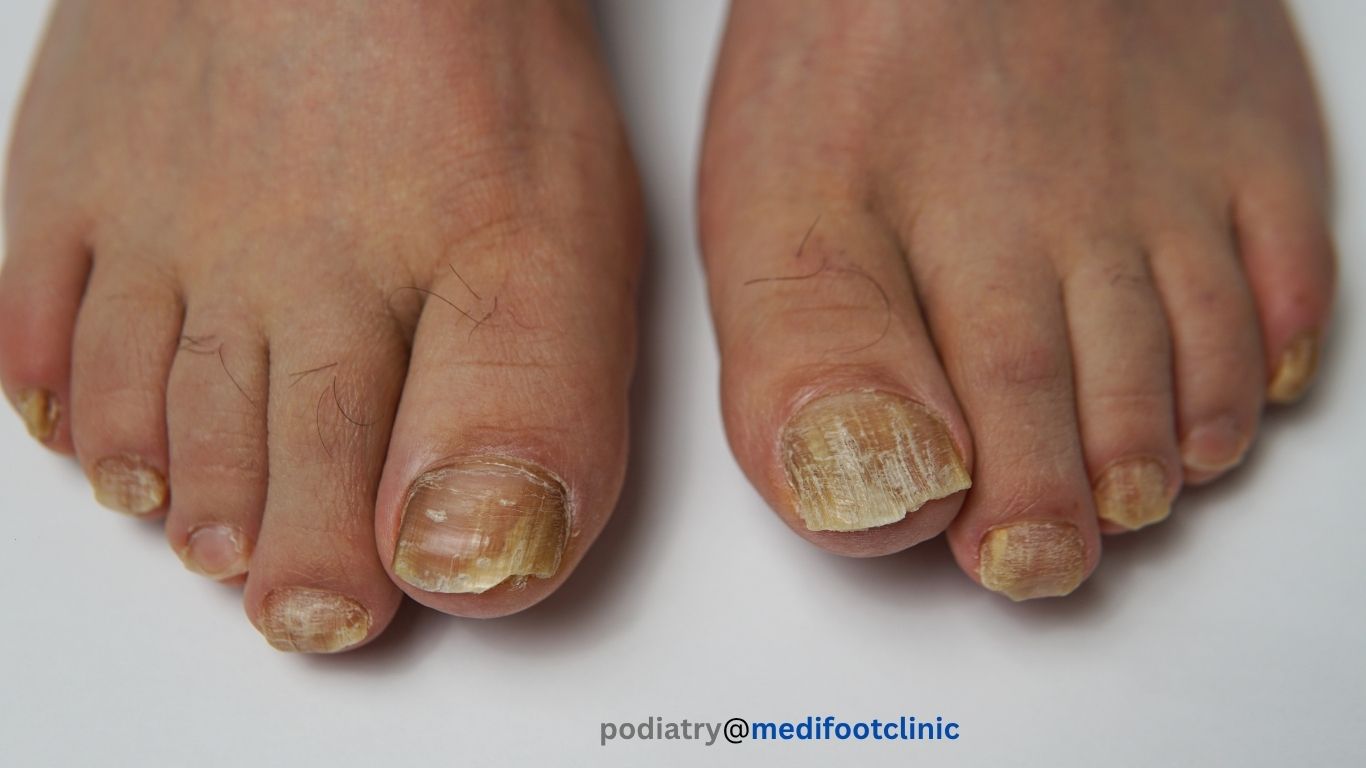
Common Signs of Fungal Toenails
- Yellow, brown or white discoloration of the nail
- Thickened toenails that are difficult to cut
- Brittle, crumbly or rough nail texture
- Nails lifting slightly from the nail bed
- Toenails that become misshapen over time
- Pressure discomfort in shoes due to nail thickness
- Repeated fungal skin infections around the feet
Not Every Thick Nail Is Fungal
Thick or damaged toenails are not always caused by fungus. Repeated shoe pressure, past nail trauma, running, sport and long-term nail damage can all produce thick toenails that look fungal. That is why it is important not to assume. Assessment helps determine whether the problem is more likely fungal, trauma-related or due to another nail condition.
How a Podiatrist Can Help
Podiatry care for fungal nail infection focuses on making the nail easier to manage, reducing thickness safely and helping you understand the most practical treatment pathway. Depending on your nail and foot health, treatment may include:
- Assessment of the nail and surrounding skin
- Safe reduction of thickened nail using sterile instruments
- Advice on nail care and footwear pressure
- Guidance on hygiene and recurrence prevention
- Discussion of whether further medical treatment or testing may be appropriate
- Ongoing routine care if the nail is difficult for you to manage at home
Why Fungal Nails Often Keep Coming Back
Fungal nail infections can be stubborn. They often persist because the nail grows slowly, the fungus sits within or under the nail and the surrounding environment may stay warm and moist inside shoes. If you also have skin fungal infection such as athlete's foot, recurrence becomes even more likely unless both issues are managed properly.
Home Care Tips for Fungal Toenails
- Keep feet clean and dry
- Change socks regularly
- Rotate footwear to reduce moisture build-up
- Avoid sharing nail clippers or files
- Trim nails carefully and avoid tearing them
- Seek help if nails become too thick, painful or difficult to manage
When to Get a Fungal Nail Checked
It is worth getting a fungal-looking nail assessed when it becomes thick, painful, recurrent, difficult to cut or when you are unsure what is causing the change. This is particularly important if you have diabetes, poor circulation, reduced sensation or difficulty reaching your feet safely.
Fungal Nail Treatment in Craigieburn and Gladstone Park
If you are dealing with thick fungal toenails in Craigieburn, Gladstone Park or nearby northern suburbs of Melbourne, MediFoot Clinic offers practical assessment and podiatry management to help reduce discomfort and improve nail care. Many patients come in because their nails have become harder to cut, more painful in shoes or simply do not seem to improve with home care alone.
Frequently Asked Questions
Can a fungal nail go away on its own?
Some mild nail changes may stay stable for a time, but many fungal nail infections do not clear easily without proper management, especially once the nail becomes thickened.
Is every yellow nail fungal?
No. Nail trauma, shoe pressure, age-related nail changes and other conditions can also cause yellow or thick nails.
Can fungal nails be painful?
Yes. They may become painful when the nail thickens and presses against footwear or when debris builds up underneath the nail.
What is the difference between athlete's foot and fungal nail infection?
Athlete's foot affects the skin, while fungal nail infection affects the nail itself. Some people have both at the same time.
Can a podiatrist reduce a thick fungal toenail?
Yes. A podiatrist can safely reduce thickened nail material to make the nail more comfortable and easier to manage.
Related Skin & Nail Pages
Need Help With Thick or Discoloured Toenails?
If your toenail has become thick, brittle, painful or difficult to manage, MediFoot Clinic can assess the problem and help you with a practical treatment plan.