Metatarsalgia (Ball of Foot Pain)
Pain in the ball of the foot is a common problem that can make standing, walking and wearing shoes uncomfortable. It often develops gradually — starting as a dull ache under the forefoot after a long day and progressing to a sharper, more persistent pain that is present from the first steps of the morning. For many people, particularly those who spend long hours on their feet in work boots or on hard surfaces, ball of foot pain can become a significant daily issue that affects both comfort and function.
At Medifoot Clinic, we assess ball of foot pain carefully to identify the likely cause and guide practical management. The goal is to reduce pressure through the forefoot, improve comfort in footwear and address the underlying reasons the pain developed in the first place.
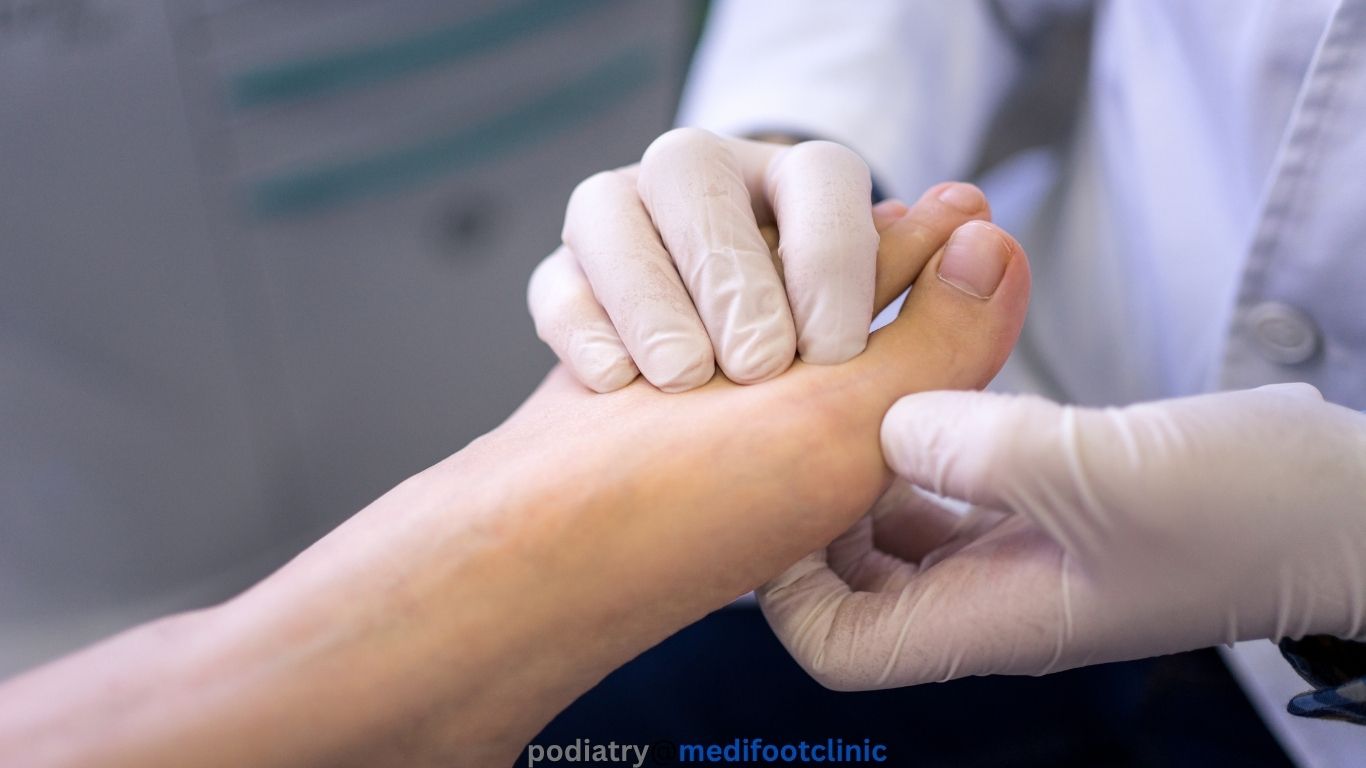
What Is Metatarsalgia?
Metatarsalgia is a term used to describe pain and inflammation in the forefoot — specifically in the area around the metatarsal heads, which are the bones that form the ball of the foot just behind the toes. When this area is overloaded or subjected to repeated pressure, the soft tissue structures underneath can become irritated and painful.
It is not a diagnosis in itself so much as a description of where the pain is located. Identifying what is causing the pressure overload — whether that is foot structure, footwear, activity load or a combination of factors — is what guides effective treatment.
Common Causes of Ball of Foot Pain
Ball of foot pain tends to develop when load through the forefoot consistently exceeds what the tissue can comfortably absorb. Common contributing factors include:
- Prolonged standing or walking, particularly on hard surfaces such as concrete, timber floors or asphalt
- Heavy or rigid work boots that concentrate load under the forefoot and provide little shock absorption
- Repetitive impact through the forefoot from running, sport or occupational activity
- A foot shape that places higher natural pressure under one or more metatarsal heads — such as a prominent second metatarsal or a foot with a high arch
- Tight or narrow footwear that compresses the forefoot and restricts natural toe spread
- A bunion at the big toe joint, which alters how load is shared across the forefoot and often increases pressure under the second and third metatarsal heads
- Reduced fatty padding under the forefoot, which can occur with age and leaves the metatarsal heads less cushioned
- Rapid increase in activity or standing time without adequate footwear support or conditioning
Running can increase pressure through the ball of the foot, especially during longer distances, higher training loads, or repeated impact. Walking for extended periods can also increase pressure through the ball of the foot, especially on hard surfaces or with poor footwear. Gym workouts can increase pressure through the ball of the foot, particularly during jumping, lifting, or repeated weight-bearing exercise. Sports that involve jumping, sprinting or rapid direction changes can also increase pressure through the ball of the foot.
Symptoms
- Aching or sharp pain under the ball of the foot, particularly with standing or walking
- A burning sensation under the toes or across the forefoot
- The feeling of walking on a pebble or stone that is not there
- Pain that is worse after long periods on your feet and eases with rest
- Pressure discomfort in the forefoot when wearing shoes, especially work boots or firm-soled footwear
- Hard skin or callus building up under the forefoot in areas of concentrated pressure
- A tendency to offload the painful area by shifting weight back toward the heel, which can contribute to heel pain over time if the compensation continues

How Metatarsalgia Relates to Other Foot Problems
Ball of foot pain rarely exists in isolation. It is often connected to how the entire foot is loading during walking and standing. A pre-existing bunion is one of the most common contributing factors, because when the big toe joint is compromised, the load that should pass through it during push-off is transferred to the second and third toes and their metatarsal heads instead.
Pressure under the forefoot also frequently leads to thickened skin and calluses forming in the areas of highest load. While the callus itself is a natural protective response, it can become painful and add to the feeling of pressure underfoot if it is not managed.
It is also worth noting that plantar fasciitis and ball of foot pain can sometimes be confused or coexist. Plantar fasciitis tends to cause pain closer to the heel, particularly with the first steps in the morning, while metatarsalgia is more localised to the forefoot. Both conditions benefit from proper assessment to ensure the right management approach is taken.
What Can Help Ball of Foot Pain
Management depends on what is driving the increased pressure in the forefoot. In many cases a combination of simple measures can provide meaningful relief without requiring significant time off or complex treatment. Options may include:
- Footwear changes — switching to a shoe with adequate forefoot cushioning, a wider toe box and a sole that better absorbs impact through the forefoot
- Metatarsal padding — placing a small pad just behind the metatarsal heads to redistribute pressure away from the painful area
- Pressure redistribution — assessing where the highest load is occurring and modifying footwear, insoles or activity to reduce it
- Orthotic support — where foot mechanics are contributing to forefoot overload, a custom or prefabricated orthotic may help share load more evenly across the foot during walking and standing
- Activity and load modification — adjusting the volume or type of activity that is driving symptoms, particularly during the early stages of recovery
- Management of contributing conditions — addressing callus buildup, bunion-related load transfer or other factors that are increasing forefoot pressure
- Early treatment — getting the problem assessed before compensation patterns develop in other areas of the foot or lower limb, which can complicate recovery
When to See a Podiatrist
- Ball of foot pain that has persisted for more than two to three weeks without clear improvement
- Forefoot pain that is affecting the way you walk, stand or exercise
- Recurring pain that returns as soon as you go back to normal activity after a rest period
- A burning sensation or numbness under the toes that is not settling
- Callus building up repeatedly in the same spot under the forefoot
- Ball of foot pain combined with an existing bunion, flat foot or high arch
- Any forefoot pain if you have diabetes, poor circulation or reduced sensation in your feet
If you are unsure whether your forefoot pain warrants an appointment, our guide on whether this needs professional care can help you weigh it up.
Metatarsalgia Treatment in Craigieburn and Gladstone Park
If you are dealing with persistent ball of foot pain in Craigieburn, Gladstone Park or surrounding Melbourne North suburbs, Medifoot Clinic provides practical podiatry assessment and management to help identify why the pain is occurring and what is most likely to reduce it. Many patients come in after finding that rest alone does not solve the problem, or that the pain keeps returning as soon as they are back on their feet for a full day. Tradespeople in construction, warehousing and manufacturing are among the most common patients we see for this type of forefoot pain — if occupational factors are contributing to your symptoms, our page on foot pain for tradies covers the specific work-related causes in more detail.
We assess forefoot pain in the context of your full foot mechanics, footwear and daily activity to ensure the management approach fits your actual situation — whether that is a job that keeps you on your feet all day, an active lifestyle or a combination of both. For a broader overview of how work, standing load and daily demands contribute to foot pain, our foot pain conditions page covers the common patterns across conditions.
Frequently Asked Questions
Is metatarsalgia the same as plantar fasciitis?
No. Plantar fasciitis is irritation of the plantar fascia tissue and typically causes pain closer to the heel, especially with the first steps in the morning. Metatarsalgia refers to pain in the ball of the foot, under the metatarsal heads. Both can occur in the same foot but they have different causes and require different management approaches.
Can the wrong footwear cause ball of foot pain?
Yes. Shoes with a thin or rigid sole, a narrow toe box, or insufficient forefoot cushioning can significantly increase pressure under the metatarsal heads. This is particularly relevant for work boots, high heels and flat-soled footwear worn for long periods on hard surfaces.
Why does the ball of my foot feel like there is something hard underneath it?
This sensation is a common symptom of metatarsalgia and is sometimes described as walking on a pebble or a marble. It is often caused by irritation around the metatarsal heads or the soft tissue structures in that area. Callus buildup under the forefoot can also contribute to this feeling.
Can a podiatrist help with metatarsalgia?
Yes. A podiatrist can assess the forefoot, identify the likely cause of the overload, check footwear, and guide practical management. Where appropriate, padding, orthotics or footwear advice may be recommended to reduce pressure through the affected area.
Need Help With Ball of Foot Pain?
If forefoot pain is affecting your walking, work or daily comfort, Medifoot Clinic can assess the problem and help you move forward with a practical management plan. We see patients at our Craigieburn and Gladstone Park locations.