Painful Corn on Foot
A painful corn on the foot can make walking uncomfortable and sometimes feel like stepping on a small stone. Corns are concentrated areas of hard skin that press inward, which is why they often cause sharper pain than broader areas of callus. They commonly develop on toes, between toes, or on pressure spots that rub inside shoes.
Related: Corns & Calluses overview
Why a corn can hurt so much
Unlike a callus, a corn is usually more localised and has a central core that pushes into deeper tissue. This focused pressure is what creates that sharp, tender feeling, especially when the corn is pressed by footwear or body weight.
Common symptoms of a painful corn
- Sharp discomfort when walking
- A sensation like something hard is inside the shoe
- Pain when pressing on a small, thickened area of skin
- Tenderness on or between the toes, or under a pressure point
Common causes of a painful corn
- Tight or narrow shoes
- Toe deformities such as hammer toes or claw toes
- Bony pressure points rubbing inside footwear
- Repeated friction during walking or standing
When to get it checked
If a corn keeps returning, becomes very painful, affects your walking, or is difficult to manage safely at home, it is worth having it assessed. This is especially important if you have diabetes, poor circulation, or reduced sensation in your feet.
Treatment for a painful corn
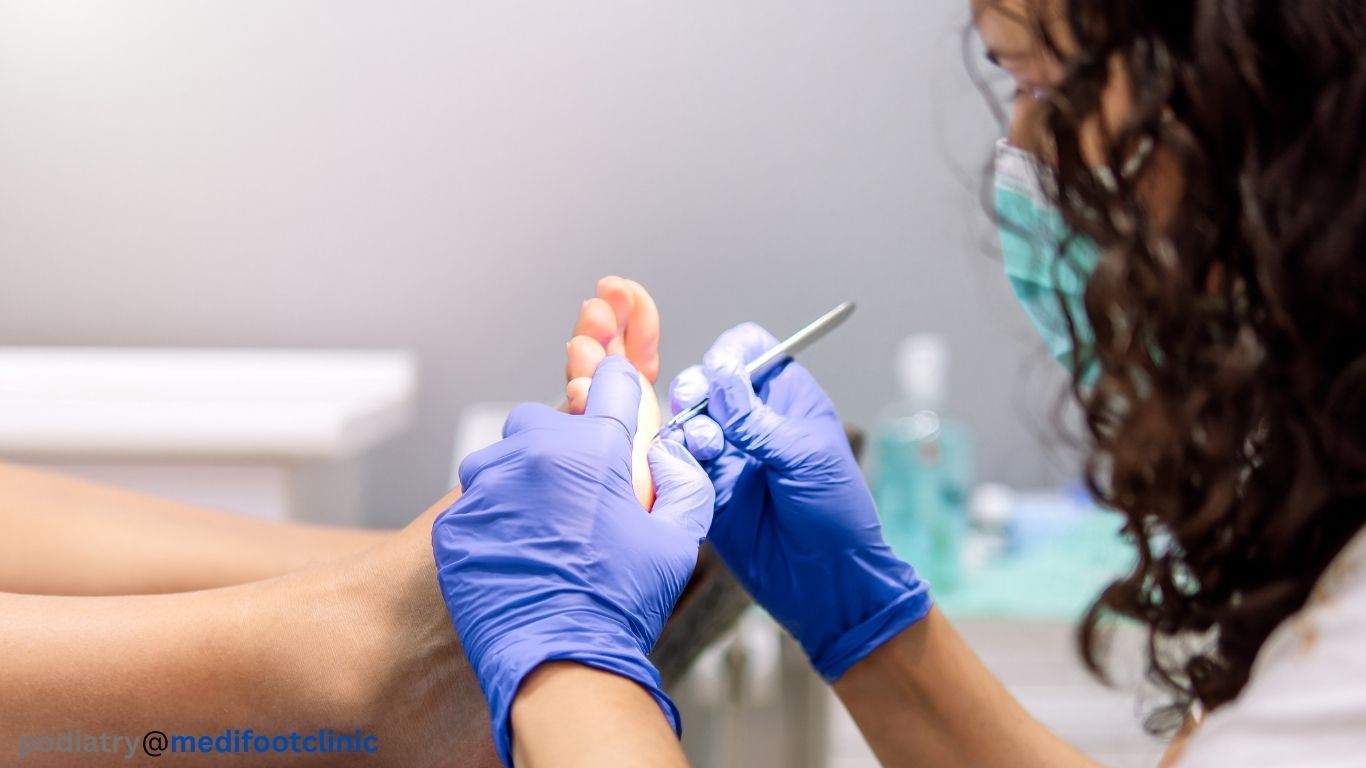
- Professional debridement to reduce the hard skin and central core
- Padding or pressure relief over the painful area
- Footwear changes to reduce rubbing
- Assessment of foot shape and pressure patterns
- Orthotics where recurring pressure is contributing
Painful corn treatment in Craigieburn and Gladstone Park
Medifoot Clinic treats patients from Craigieburn, Gladstone Park, and surrounding Melbourne suburbs who are struggling with painful corns that affect walking, shoe comfort, and daily activity. Treatment focuses on relieving the immediate pain and reducing the pressure that caused the corn to form.
If you are not sure whether you are dealing with a corn, callus, or another pressure-related skin problem, our broader corns and calluses guide explains the main differences and treatment approach.
Frequently Asked Questions About a Painful Corn
Why does a corn hurt so much?
A corn can be very painful because it usually has a central core that presses into deeper tissue. This focused pressure can make walking and shoe wear uncomfortable.
Can a painful corn affect the way I walk?
Yes. Some people start shifting their weight to avoid the sore spot, which can change how they walk and make the foot feel more uncomfortable overall.
Should I try to cut out a painful corn myself?
It is generally not a good idea to cut hard skin yourself, especially if the area is very sore or if you have diabetes, poor circulation, or reduced sensation. Self-treatment can increase the risk of injury.
When should a painful corn be checked by a podiatrist?
It is worth getting checked if the corn is making walking difficult, keeps returning, becomes more painful, or cannot be managed safely at home.
When to Seek Podiatry Care for a Painful Corn
A painful corn is worth getting checked when it starts affecting your walking, becomes more tender over time, or keeps returning after simple treatment.
- If walking becomes uncomfortable because of the corn
- If the pain keeps coming back in the same spot
- If footwear pressure makes it worse
- If you are tempted to cut or treat it aggressively at home
- If you have diabetes, poor circulation, or reduced sensation
Also see: Corns
Also see: Corn vs Callus