Foot Pain in Chefs
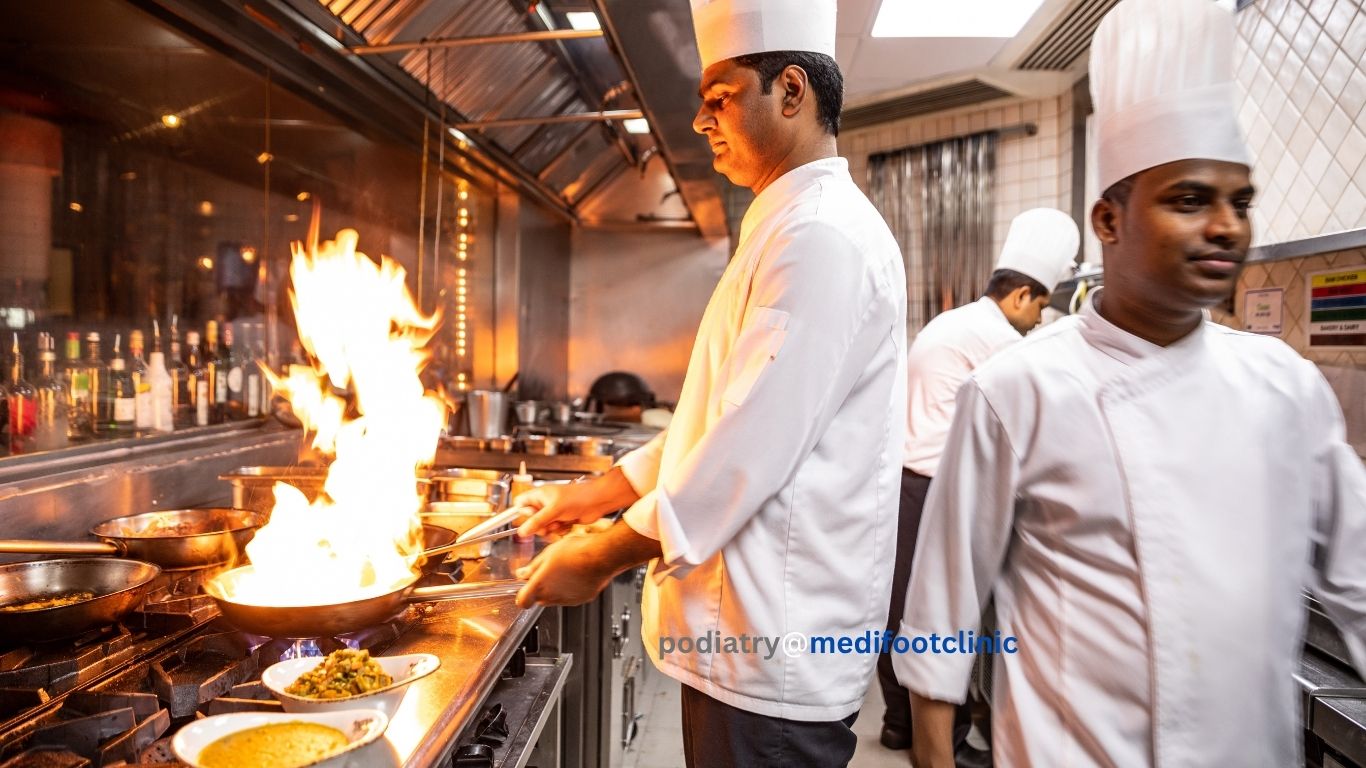
Kitchen work is one of the most demanding occupations on the feet. Chefs spend long hours standing at benches and stoves, moving quickly in confined spaces, working on hard tiled floors and wearing safety footwear that may offer little in the way of cushioning or forefoot room. With shifts that regularly run ten hours or more and very little time to rest the feet, it is not surprising that heel pain, ball of foot pain and corns and calluses are common among chefs and kitchen workers — including those working in and around Craigieburn and Gladstone Park.
The culture of most kitchens means foot pain is often pushed through rather than addressed, and a busy service is rarely a reason to stop. But symptoms that are dismissed as an ordinary part of the job — such as sharp morning heel pain consistent with plantar fasciitis, or a burning ache under the forefoot typical of metatarsalgia — often have a clear mechanical cause that can be addressed with the right assessment. Our broader foot pain conditions guide covers the common patterns that affect people who spend long hours on their feet.
Why Chefs Often Get Foot Pain
The kitchen environment creates a specific set of conditions that place sustained and concentrated load on the feet throughout every shift. Common contributing factors include:
- Prolonged standing at benches, stoves and preparation areas — often in the same position for extended periods with little opportunity to change posture or rest
- Hard tiled kitchen floors throughout the entire shift, with no cushioning or give underfoot, directly contributing to heel pain and plantar fasciitis
- Long shifts of ten hours or more — across lunch and dinner services — with the foot load accumulating continuously and very limited time off the feet between services
- Safety footwear requirements that typically mean rigid-soled, slip-resistant shoes with little forefoot cushioning and a toe box that may compress the foot, contributing to metatarsalgia, ball of foot pain and bunion pain
- Repetitive movement within a confined kitchen space — turning, reaching, pivoting and moving quickly between stations — which loads the feet in similar ways throughout the shift with minimal variation
- Minimal sitting time at any point during a service, meaning the feet rarely get adequate rest between periods of loading, which over time drives corns and calluses at sustained pressure points
Common Types of Foot Pain in Chefs
The most frequent complaint among chefs and kitchen workers is heel pain. Sustained standing on hard tiled floors in safety shoes with rigid soles means the heel absorbs repeated impact with little shock absorption across the entire shift. The pain often develops gradually and builds through the service, becoming most noticeable in the hours after finishing work or on the following morning.
A very common cause of that heel pain is plantar fasciitis — irritation of the thick band of tissue that runs along the base of the foot from the heel to the toes. The hallmark symptom is sharp or aching pain with the first few steps out of bed in the morning, or after sitting down between services and then standing up again. Chefs who work double shifts or long back-to-back services are particularly prone to this condition, especially if their kitchen shoes offer little arch support or cushioning underfoot.
Metatarsalgia is a frequent cause of ball of foot pain in chefs. It involves irritation around the metatarsal heads — the bony prominences just behind the toes — producing an aching or burning sensation under the front of the foot that builds through the service. Rigid-soled kitchen shoes provide very little cushioning under the forefoot, and the sustained standing and quick movement in confined spaces repeatedly loads this area throughout the shift.
The combination of kitchen shoe pressure and prolonged standing on hard floors frequently leads to corns and calluses developing at sustained pressure points — particularly the ball of the foot, the tops and sides of the toes and along the heel edges. These areas of thickened skin develop as a protective response to repeated friction and pressure, but they become increasingly uncomfortable over time and can add noticeably to end-of-shift discomfort.
Chefs with a pre-existing bunion often find that kitchen safety shoes aggravate the joint, particularly when the toe box is narrow or when the shoe places direct pressure on the bony prominence. Long shifts mean the joint is loaded repeatedly across many hours with very little recovery, and the inflammation can become quite pronounced by the end of a double service.
What Chefs May Notice After Shifts
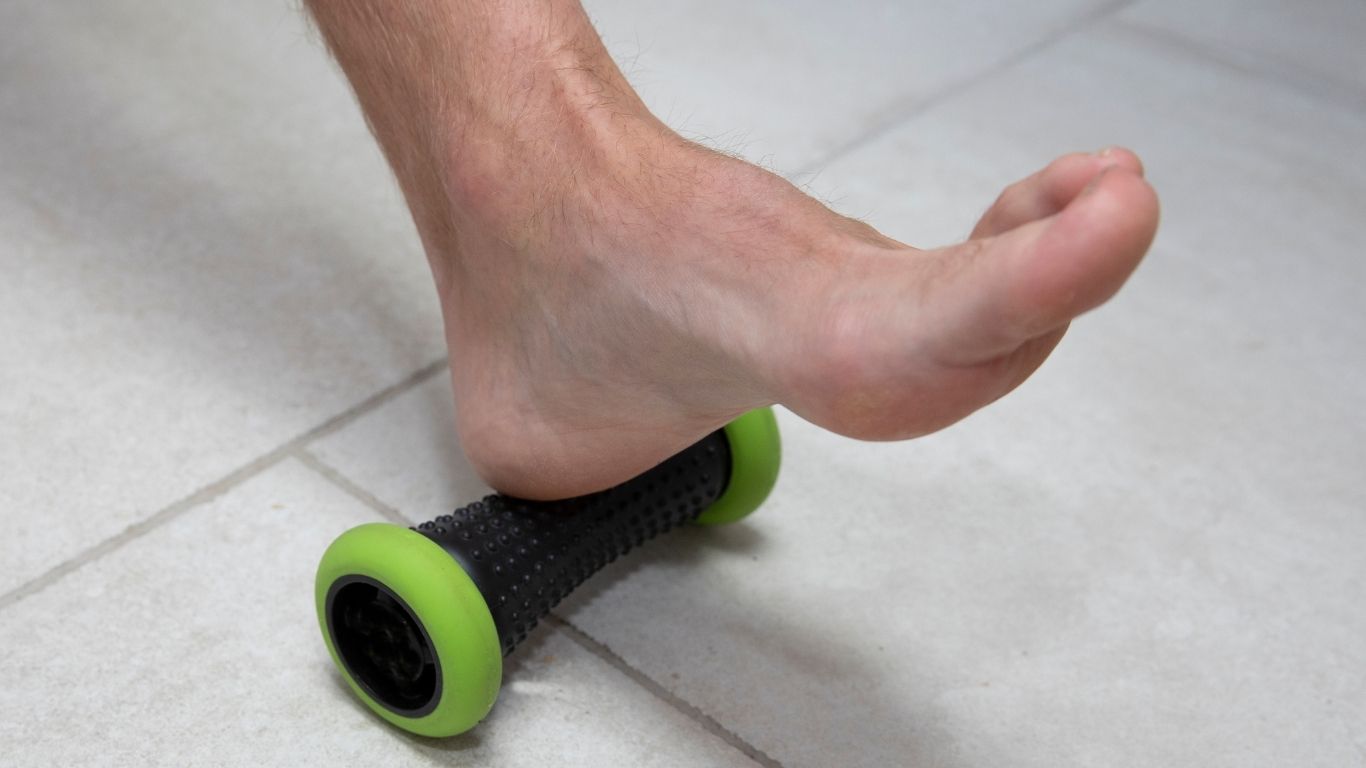
Symptoms that build through a service and persist into rest time are worth paying attention to rather than accepting as normal. Common patterns include:
- Heel pain that builds progressively through the service and is pronounced by the time the shift ends
- Sharp or aching pain with the first steps in the morning or after sitting between services — a pattern consistent with plantar fasciitis
- A burning or aching sensation under the front of the foot that develops through the service — often a sign of metatarsalgia or ball of foot pain
- General aching or heaviness through the feet after a long shift or double service that does not settle with a normal night of rest
- Thick skin, corns or calluses that are becoming increasingly painful underfoot in kitchen shoes
- Bunion pain or joint irritation at the base of the big toe that flares during longer shifts and is particularly noticeable in tighter kitchen footwear
When to Get It Checked
Foot pain is so common in kitchen work that many chefs accept it without question. But some symptoms are a sign that something needs proper attention:
- Heel pain or arch pain that has persisted for more than a few days without improvement despite rest
- Morning first-step pain or post-break pain consistent with plantar fasciitis that reliably returns on work days
- Forefoot soreness or ball of foot pain that builds reliably through services and does not settle adequately on days off
- Limping by the end of a shift, or noticeably changing the way you move to avoid pain during service
- Corns or calluses that are growing more painful despite home care
- Bunion pain that is worsening or making it difficult to get through a full service comfortably
Podiatry for Chefs in Craigieburn and Gladstone Park
Medifoot Clinic sees chefs, cooks and hospitality workers from Craigieburn, Gladstone Park and the surrounding Melbourne North suburbs. We understand the physical demands of kitchen work and the way hospitality rosters make it difficult to find time for appointments outside of service hours.
Our assessments focus on identifying the actual cause of your foot pain — whether that is footwear, how the foot is loading, the surfaces you work on or the length of your shifts — and putting a practical management plan in place that fits your working life. Whether you are dealing with heel pain, forefoot soreness, corns and calluses or bunion pain, we aim to help you get on top of it before it becomes a bigger problem. Our clinics are located in Craigieburn and Gladstone Park for your convenience.
Book a Foot Assessment
If foot pain is affecting your service or following you home after a shift, do not put off getting it assessed. Medifoot Clinic offers podiatry assessments for chefs and kitchen workers at our Craigieburn and Gladstone Park locations.
Related Conditions
Chefs commonly move between these foot pain patterns depending on shift length, kitchen shoe fit, the surfaces worked on and how physical the service is. Each condition has its own page with more detail on causes, symptoms and management options.