Poor Circulation in the Feet and Diabetes
Diabetes can affect circulation in the feet, reducing blood flow and slowing healing. This can make it harder for the body to repair small injuries and can increase the risk of complications if problems develop.
Circulation changes are often gradual and may not always be obvious. A proper foot assessment can help identify early signs and guide the right care. For a broader overview of risk, prevention, and ongoing care, you can also visit our diabetes foot assessment page.
What is poor circulation?
Circulation refers to how well blood flows through your body. In the feet, good circulation helps deliver oxygen and nutrients needed for skin health and healing. When circulation is reduced, the foot may take longer to recover from pressure, injury, or skin damage.
Circulation should not be looked at in isolation. In diabetes, slower healing may overlap with reduced sensation from diabetic neuropathy and with pressure build-up, which together may increase the chance of foot ulcer risk.
Signs of poor circulation in the feet
- Cold feet or temperature differences
- Colour changes such as pale, blue, or darker areas
- Slow healing of cuts or blisters
- Shiny or thin-looking skin
- Reduced hair growth on the feet or toes
Some people notice these changes clearly, while others simply find that small problems seem to linger longer than expected. A diabetes foot check can help assess whether circulation may be part of the picture.
Why circulation matters in diabetes
Reduced circulation means the foot may not heal as quickly if there is skin damage or pressure. When combined with reduced sensation, this can increase the risk of more serious problems such as infection or ulceration.
This is why circulation should always be considered alongside skin condition, sensation, and pressure areas. For example, if thickened skin is building up under load, it is worth understanding how diabetes, calluses, corns and pressure areas may be contributing to risk.
Skin cracks, thick nails, and irritation can also become more important when healing is slower. You can read more on our diabetes skin and nail problems page.
When to have your circulation checked
- If your feet feel consistently cold
- If you notice colour changes in the skin
- If wounds or blisters are slow to heal
- If you have diabetes and have not had a recent foot assessment
- If you are unsure about your circulation
A circulation check is especially worth considering if you also have numbness, pressure areas, skin changes, or a history of wounds.
If you also experience pain under the heel — particularly with first steps in the morning — this may be worth exploring separately, as plantar fasciitis can affect people with or without diabetes and may benefit from its own assessment.
Understanding your diabetes foot risk
- Start with a full diabetes foot assessment
- Learn what happens during a diabetes foot check
- Reduced feeling can increase risk – read about diabetic neuropathy
- Understand warning signs of foot ulcers
- Pressure areas may need care – see diabetes callus and pressure care and our broader corns and calluses page.
- Skin and nail health also matters – visit our diabetes skin and nails page and wider skin and nails page.
Frequently asked questions
Can diabetes cause poor circulation in the feet?
Yes, diabetes can affect blood flow, which may reduce circulation and impact healing.
Why do my feet feel cold with diabetes?
Cold feet can sometimes be linked to circulation changes, but it is important to have it assessed.
Can a podiatrist check circulation?
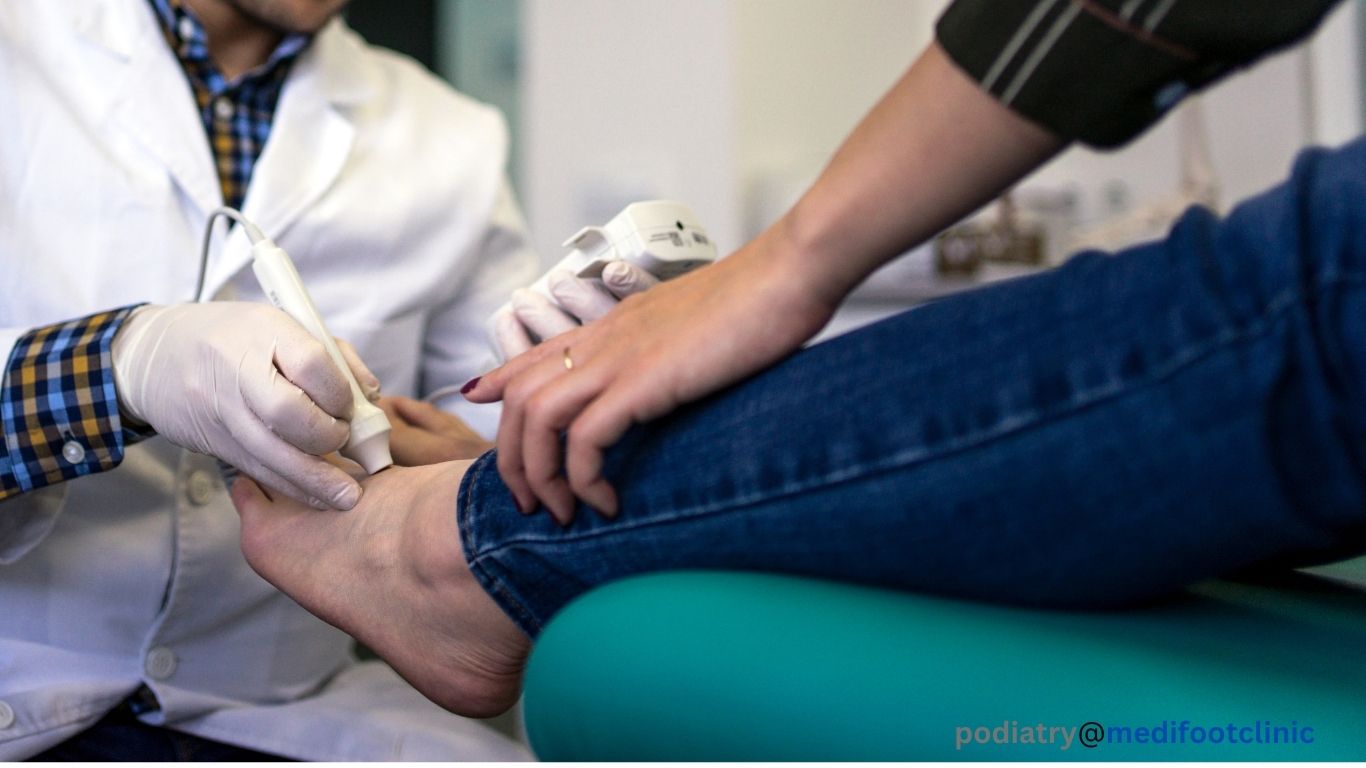
Yes, circulation can be assessed using clinical tests and equipment such as Doppler.
Is slow healing a sign of poor circulation?
It can be. Slow healing should always be assessed, especially in people with diabetes.
When should I get my feet checked?
If you notice changes in temperature, colour, or healing, or if you have not had a recent foot check, it is worth booking an assessment.
Circulation assessment in Craigieburn & Gladstone Park
We assess circulation, sensation, and foot health for patients across Melbourne’s north, including Craigieburn and Gladstone Park.
Podiatrists near Craigieburn & Gladstone Park
We assess circulation, sensation, skin and pressure areas to help prevent complications and keep your feet healthy with diabetes.