Diabetes, Skin Problems and Nail Changes in the Feet
Skin and nail changes are common, but they can become more important when you have diabetes. Dry skin, cracks, thick nails, fungal nails, and irritation may increase pressure, create entry points for infection, or make it harder to keep the feet comfortable and protected.
What might seem like a small foot problem can sometimes carry more risk in diabetes, especially when reduced sensation or circulation changes are also present. For a broader overview of diabetes- related foot care, you can also visit our diabetes foot assessment page.
Why skin and nail problems matter more in diabetes
Diabetes can affect the feet in several ways. Reduced sensation can make it harder to notice small problems, while circulation changes may affect healing. If the skin becomes cracked or a thick nail starts rubbing in footwear, the risk can increase.
This does not mean every skin or nail problem is serious, but it does mean these issues should be assessed properly rather than ignored. A structured diabetes foot check can help identify whether skin, nails, pressure, sensation, or healing are becoming part of a bigger picture.
Common skin and nail problems in diabetic feet
- Dry skin and scaling
- Cracks in the heels or around pressure areas
- Thickened or difficult-to-manage toenails
- Fungal nail changes
- Skin irritation from footwear or pressure
- Areas of redness, rubbing, or tenderness
These changes can overlap with other diabetes-related foot risks. If sensation is reduced because of diabetic neuropathy, you may not notice irritation or rubbing early. If healing is slower because of circulation changes, minor skin damage may deserve quicker attention.
When dry skin and cracks become more important
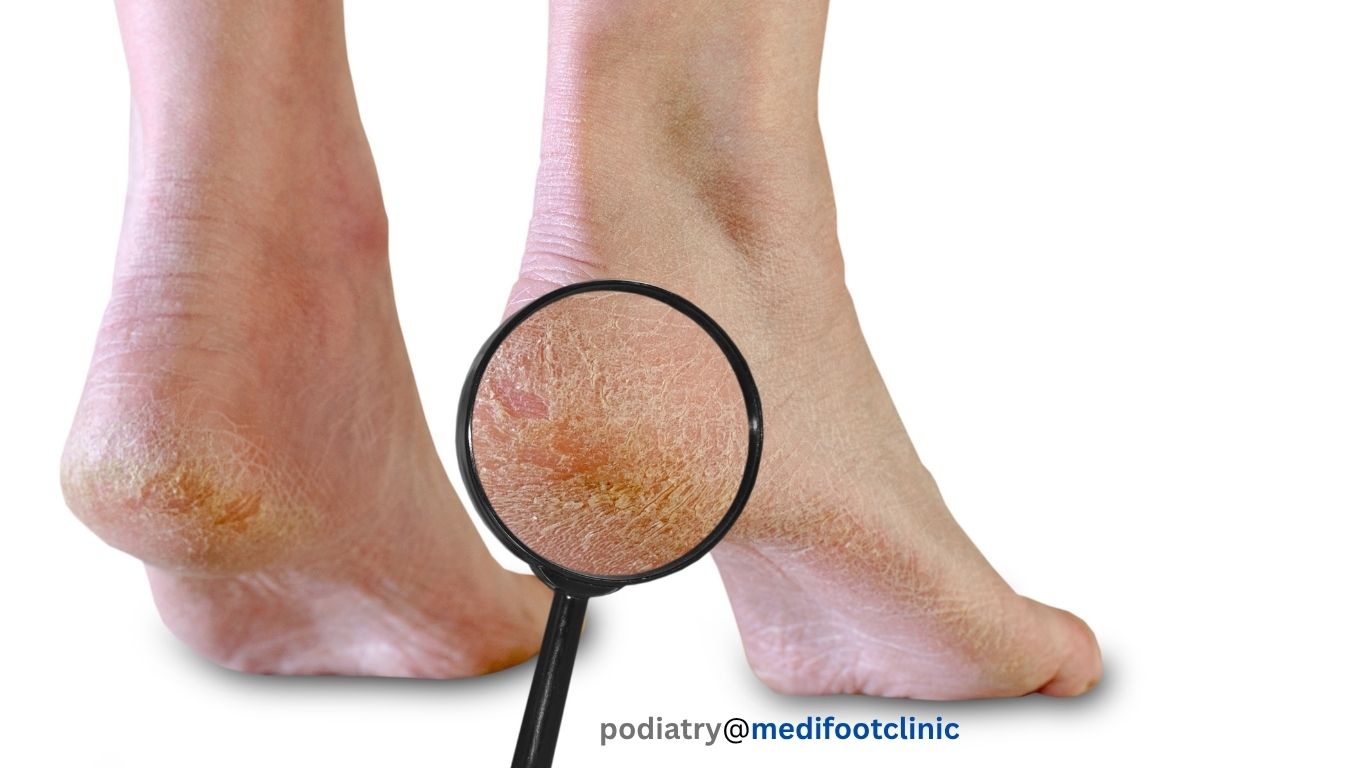
Dry skin is common, but when the skin starts to crack it can lose some of its protective barrier. In diabetes, cracked skin deserves more attention because it may become sore, deepen, or create a pathway for infection.
Cracks around the heels are especially worth checking if there is also callus build-up, pressure, or reduced sensation. If this is what you are dealing with, it may help to read more about cracked heels and how they fit into diabetes foot care.
If dry, thickened skin is building up under load, it may also link with diabetes callus, corns, and pressure areas, which can increase stress on the tissue underneath.
Thick nails, fungal nails and pressure
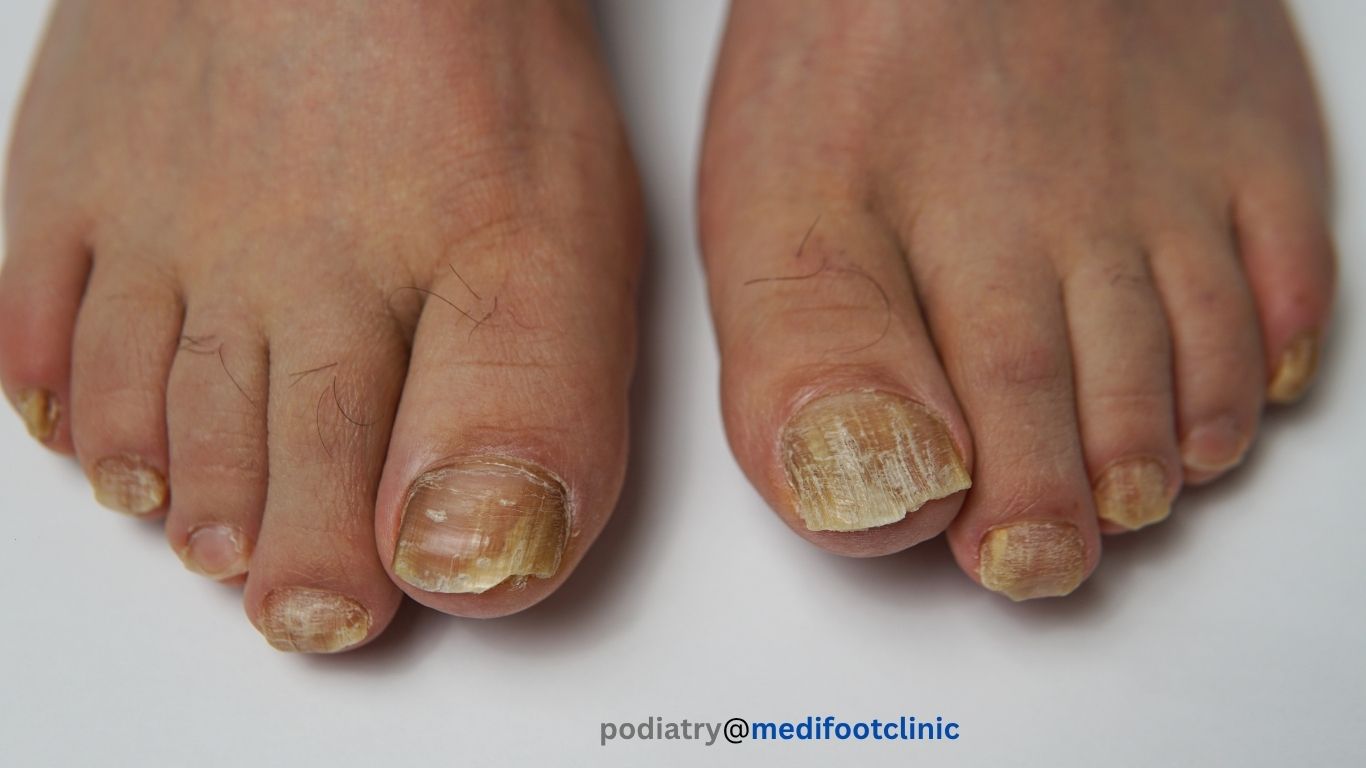
Thickened or fungal nails are not just a cosmetic concern. They can become harder to cut safely, press against footwear, or irritate nearby skin. In some cases, thick nails can contribute to rubbing or discomfort that needs proper management.
If you already have reduced sensation, you may not notice pressure from a thick nail or irritated skin as early as you otherwise would. If fungal change is part of the issue, you can also read our fungal nails page for broader information.
When to seek podiatry care
- If you have cracks that are deepening or not improving
- If thick nails are difficult to manage or causing rubbing
- If fungal nail changes are getting worse
- If skin is red, irritated, or breaking down
- If you are unsure whether a skin or nail problem is becoming a risk
Skin and nail changes deserve earlier review in diabetes because they can sometimes lead into broader foot ulcer risk if pressure, rubbing, or skin breakdown are left unchecked.
Understanding your diabetes foot health
- Start with a diabetes foot assessment
- Learn what happens during a diabetes foot check
- Reduced feeling can increase risk – read about diabetic neuropathy
- Healing may also be affected – see poor circulation in diabetic feet
- Understand the warning signs of diabetes foot ulcer risk
- If pressure and hard skin are part of the issue, see our diabetes pressure and callus page and broader corns and calluses page.
- For broader nail and skin care, visit our skin and nails page
- Read more about fungal nails
- Learn about cracked heels
Frequently asked questions
Are skin problems more serious in diabetes?
They can be more important because dry skin, cracks, or irritation may carry more risk if sensation or healing is affected.
Do fungal nails matter if I have diabetes?
They can, especially if the nail becomes thick, difficult to manage, or causes pressure in footwear.
Should I worry about cracked heels with diabetes?
Cracked heels are worth checking, particularly if the skin is deepening, sore, or combined with thick callus.
Can thick nails cause pressure problems?
Yes. Thick nails can press on nearby skin or inside footwear and may need professional care.
When should I book an assessment?
If you notice worsening cracks, thick nails, skin irritation, redness, or anything you are unsure about, it is worth having it checked.
Diabetes foot care in Craigieburn & Gladstone Park
We help patients across Melbourne’s north manage skin, nail, and diabetes-related foot concerns in Craigieburn and Gladstone Park.
Podiatrists near Craigieburn & Gladstone Park
We assess circulation, sensation, skin and pressure areas to help prevent complications and keep your feet healthy with diabetes.